

PS5 Tariff Price Increase Lawsuit
Understand the details behind the PS5 tariff price increase lawsuit. We break down the legal implications, consumer backlash, and the future of gaming hardware.

The PS5 Tariff Price Increase Lawsuit: What Gamers Need to Know
Buying a new gaming console used to be a straightforward transaction. You saved your money, checked the retail price, and made your purchase. Recently, the landscape shifted dramatically for PlayStation fans. A significant price hike tied to international trade policies sparked intense backlash, culminating in the highly publicized PS5 tariff price increase lawsuit.
Gamers and consumer rights advocates are pushing back against hardware manufacturers passing geopolitical costs directly to the buyer. This legal battle represents much more than a dispute over a few extra dollars on a retail receipt. It highlights the complex relationship between global supply chains, international trade law, and everyday consumer rights.
This article breaks down exactly why this price increase happened and explores the legal foundations of the lawsuit. You will learn how the consumer response is shaping up, what this means for the broader gaming industry, and how hardware pricing might change in the future.
Why Did the PS5 Price Increase Happen?
To understand the lawsuit, you must first look at the economic factors that drove the price increase. Console pricing traditionally remains static or drops over the lifespan of the hardware. Sony broke this industry norm, citing severe economic pressures.
The Role of Import Tariffs
The core issue revolves around international trade tariffs. Governments use tariffs as a tax on imported goods to protect domestic industries or penalize foreign trade practices. When a new tariff hits consumer electronics, the cost to import a fully assembled PS5 into certain regions spikes.
Manufacturers faced a difficult choice. They could absorb the tax and reduce their profit margins, or they could pass the cost directly to the consumer. Sony chose the latter in several key global markets. This decision meant that a console sitting on a store shelf suddenly cost significantly more overnight, entirely due to trade policy adjustments. You can learn more about how these taxes impact consumer goods through resources like the World Trade Organization.
Supply Chain and Manufacturing Costs
Tariffs did not act alone. The global supply chain faced unprecedented bottlenecks over the last few years. The cost of raw materials, specifically the rare earth metals required for advanced semiconductors, skyrocketed.
Shipping logistics also became a financial nightmare for hardware companies. Securing cargo space on international freighters costs exponentially more than it did during previous console generations. When you combine raw material shortages, inflated shipping costs, and aggressive new tariffs, the economic pressure on hardware manufacturers reaches a breaking point. However, consumer advocates argue that massive corporations should insulate buyers from these macro-economic fluctuations.
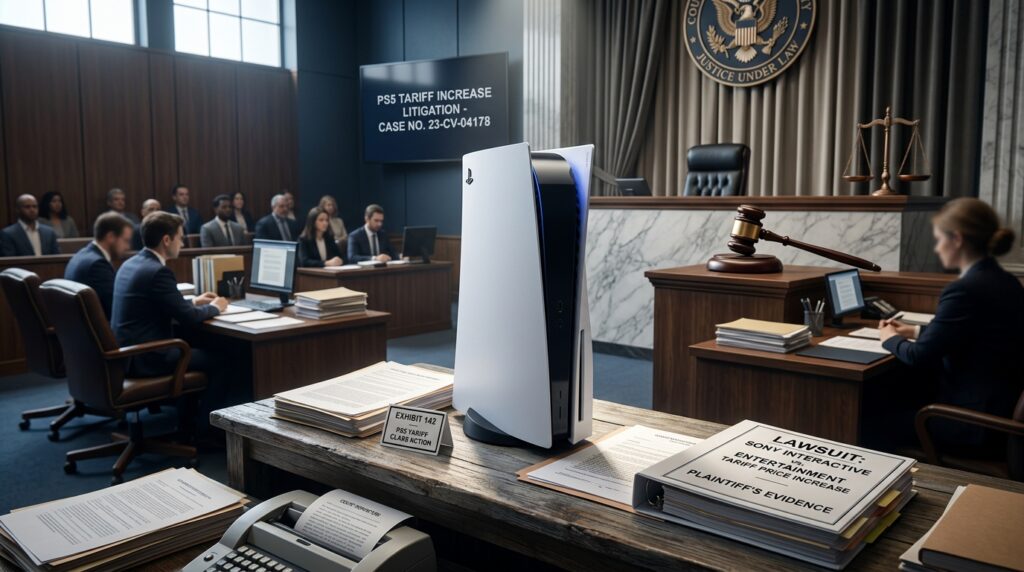
Inside the PS5 Tariff Price Increase Lawsuit
The frustration over the price hike quickly moved from internet forums to the courtroom. Consumer protection groups and angry buyers organized to challenge the legality of how these price increases were implemented and communicated.
Who is Suing Whom?
The lawsuit takes the form of a class-action complaint. In a class-action lawsuit, a small group of plaintiffs represents a much larger group of affected consumers. They are taking legal action against Sony Interactive Entertainment and, in some jurisdictions, the regional distribution partners responsible for retail pricing.
The plaintiffs argue that they suffered financial harm due to unfair business practices. They claim that the manufacturer unjustly passed the burden of international trade disputes onto the end-user without adequate warning or justification.
Core Legal Arguments
The legal foundation of the PS5 tariff price increase lawsuit rests on consumer protection laws. Lawyers representing the gamers argue several key points.
First, they target the transparency of the pricing structure. They argue that marketing materials and pre-order agreements established a fixed expectation for the console’s price. When the price increased due to tariffs, the plaintiffs claim this violated implied contracts with the consumer base.
Second, the lawsuit examines anti-competitive behavior. Because the PS5 operates within a closed ecosystem, consumers who already invested in PlayStation digital libraries or accessories have no choice but to accept the price hike if they want to upgrade their hardware. The plaintiffs argue that this locks consumers in and forces them to absorb unfair tariff penalties. Legal experts often refer to guidelines set by organizations like the Federal Trade Commission when evaluating these types of market dominance claims.
The Defense Strategy
Sony and its legal teams hold a different perspective. Their defense centers on the harsh realities of global economics and the fundamental rights of a business to adjust pricing to maintain viability.
They argue that retail prices are never guaranteed in perpetuity. Terms of service and retail agreements almost always include clauses that allow for price adjustments based on market conditions. Furthermore, they point out that tariffs are external government actions, not internal corporate strategies. Defending lawyers assert that adapting to international tax laws does not constitute a deceptive business practice.
Consumer Backlash and Market Response
The announcement of the price increase sent shockwaves through the gaming community. The subsequent lawsuit only amplified the intense consumer backlash.
Gamer Frustrations
Video games often serve as an affordable form of escapism. When the entry price for the current generation of gaming rises, it alienates a massive portion of the audience. Gamers took to social media, organizing boycotts and expressing deep frustration.
Many consumers felt betrayed. They supported the brand through hardware shortages and scalper crises, only to face a corporate-mandated price hike just as supply chains began to normalize. This eroded brand loyalty, a crucial metric in the highly competitive console market.
Impact on Console Sales
The immediate market response showed mixed results. In regions where the price increase hit hardest, physical console sales saw a temporary dip. Consumers who were on the fence about purchasing a PS5 decided to wait, hoping for a price drop or a resolution to the tariff disputes.
However, the demand for the hardware remained resilient overall. The strength of exclusive software titles kept hardware moving off the shelves, albeit at a slower pace in affected markets. This dynamic proves that while consumers are angry enough to file lawsuits, the underlying product still holds massive market appeal.
Broader Implications for the Gaming Industry
The PS5 tariff price increase lawsuit does not exist in a vacuum. The outcome of this legal battle will set a precedent that affects every major player in the consumer electronics space.
Will Other Consoles Follow Suit?
Competitors like Microsoft and Nintendo watched this situation closely. Initially, competing console manufacturers stated they had no plans to increase hardware prices. They used Sony’s price hike as a competitive advantage, marketing their consoles as the more stable, consumer-friendly options.
However, economic realities eventually catch up to everyone. If the lawsuit fails and the courts rule that passing tariff costs to consumers is perfectly legal and standard, other companies will likely feel emboldened to adjust their own prices. We could see a future where hardware costs fluctuate regularly based on geopolitical trade wars.
The Future of Hardware Pricing
This lawsuit marks a potential turning point for how gaming hardware is sold. For decades, the industry relied on the “loss leader” strategy. Companies sold consoles at a loss to build a massive user base, making their profits on software sales and subscription services.
The tariff situation forces companies to rethink this model. If hardware becomes too expensive to manufacture and import, the loss leader strategy collapses. Companies may pivot entirely toward cloud gaming and hardware-agnostic subscription models to avoid international manufacturing tariffs altogether.
How the Lawsuit Affects Game Developers
Hardware prices directly impact the software ecosystem. When fewer people can afford a new console, the install base shrinks. This creates a massive problem for game developers.
Reduced Software Sales
Developers spend hundreds of millions of dollars creating “AAA” gaming experiences. They need a massive audience to buy those games to turn a profit. If the PS5 tariff price increase prevents a million potential gamers from buying the console, that means one million fewer potential customers for a newly released game.
Independent developers feel this squeeze even harder. They operate on razor-thin margins. A shrinking install base caused by high hardware costs can easily push smaller studios into bankruptcy.
A Shift Toward Cross-Generation Development
To mitigate the risk of a smaller PS5 user base, developers are changing how they build games. Instead of creating software exclusively for the newest hardware, they continue to release games for older consoles like the PlayStation 4.
While this ensures a larger audience, it holds back technological progress. Games must be designed to run on ten-year-old hardware, meaning they cannot fully utilize the speed and power of the new systems. The tariff price increase indirectly stalls the advancement of gaming technology by keeping players stuck on older generations.
How Consumers Can Protect Themselves
While the lawsuit plays out in the courts, everyday buyers need practical strategies to navigate this expensive new reality. You do not have to absorb every price hike the industry throws at you.
Understand Your Local Consumer Rights
Different regions offer different levels of protection. For instance, consumer laws in the European Union differ vastly from those in the United States. Take the time to understand what protections your local government guarantees regarding retail pricing, warranties, and digital goods.
Explore Alternative Gaming Ecosystems
If the cost of a traditional console becomes too high due to tariffs, look at other options. The PC gaming market offers incredible flexibility. While PC parts are also subject to tariffs, you have the freedom to upgrade individual components over time rather than buying an entirely new system.
Additionally, cloud gaming services let you play high-end games on hardware you already own, like older laptops or smart TVs. This bypasses the need to purchase a heavily taxed physical console entirely.
Wait for Hardware Revisions
Console manufacturers traditionally release “slim” or revised versions of their hardware a few years into a generation’s life cycle. These revisions use smaller, more efficient components that cost less to manufacture and ship. If you can wait, purchasing a mid-generation hardware revision often saves you money and insulates you from initial supply chain tariffs.
The Long-Term Legal Precedent
The PS5 tariff price increase lawsuit represents a critical test of consumer power in the digital age. Regardless of who wins in the courtroom, the arguments presented will shape corporate policy for years.
If the plaintiffs succeed, hardware manufacturers will have to absorb the costs of international trade disputes, potentially leading to safer, more stable pricing for consumers. It would force companies to communicate clearly and guarantee prices, protecting buyers from sudden financial shocks.
If Sony prevails, it sets a legal standard that consumers bear the ultimate financial responsibility for global supply chain disruptions. This could lead to an era of variable hardware pricing, where the cost of a console changes month to month based on international trade agreements.
Conclusion
The PS5 tariff price increase lawsuit is a pivotal moment in gaming history. It bridges the gap between digital entertainment and global macroeconomics. Gamers are pushing back against the normalization of passing geopolitical costs directly to the end-user.
The outcome of this class-action legal battle will dictate how technology companies price their hardware in the future. It will influence whether the gaming industry maintains its traditional pricing models or moves toward a more volatile, market-driven structure.
As a consumer, you must stay informed. Watch how the courts rule on these consumer protection arguments. Adapt your purchasing habits, explore alternative gaming platforms, and remember that your buying power is the ultimate vote in shaping the future of the industry.

Law Enforcement Shuts Down VPN
Legend of Zelda 40th anniversary
Paid Survey Earn Money Online


Powered by SocioLib.