
Law Enforcement Shuts Down a VPN
Explore the massive implications of law enforcement shutting down a VPN service. We break down how this affects your digital privacy, cybersecurity, and the future of the VPN industry.

When the Shield Falls: Law Enforcement Shuts Down a VPN
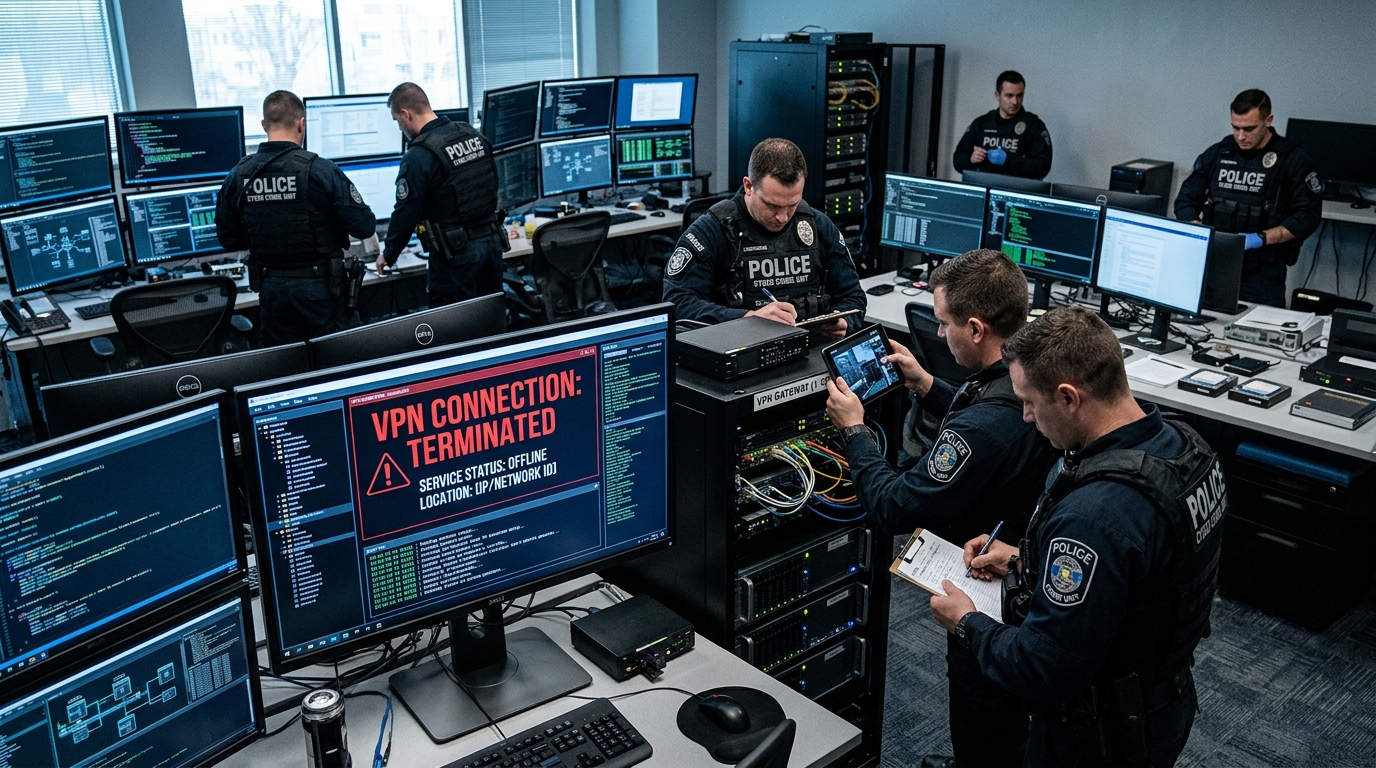
Global police forces recently achieved an unprecedented milestone. In a coordinated international effort, law enforcement agencies successfully seized the servers and domains of a major Virtual Private Network (VPN) provider. Authorities targeted the network because cybercriminals used it to mask their identities while launching ransomware attacks, stealing data, and running illegal dark web marketplaces.
For years, people viewed VPNs as untouchable digital fortresses. You turn on the software, your IP address changes, your traffic scrambles into an unreadable mess, and you browse the internet in total secrecy. But this recent takedown shatters that illusion. It proves that when international police agencies pool their resources, they can break through even the most robust digital shields.
This event sparks a massive debate. While taking down criminal infrastructure makes the internet safer, it also raises serious questions about digital privacy, government overreach, and the future of online anonymity. We must look closely at what happens when law enforcement shuts down a VPN, how it impacts the broader cybersecurity landscape, and what it means for your personal data.
The Mechanics of a VPN Takedown
To understand the weight of this event, we need to look at how police actually dismantle a global network. A VPN is not just a piece of software on your computer. It relies on a massive physical infrastructure. VPN companies rent or own hundreds of physical servers housed in data centers around the world.
When law enforcement shuts down a VPN, they do not just send a strongly worded letter. The operation requires months of quiet coordination between agencies like the FBI in the United States, Europol in Europe, and local police forces across different continents.
First, authorities identify the physical locations of the VPN servers. Then, they secure warrants from local judges. On a coordinated date, local police physically enter these data centers. They pull the servers from the racks. They confiscate the hard drives. At the exact same time, cyber divisions seize the company’s website domains, replacing the homepage with a stark law enforcement warning banner.
The network goes dark instantly. Anyone connected to the VPN loses their secure tunnel. But the real danger lies in what happens to the seized hardware. If the VPN provider kept logs of user activity, law enforcement now holds a treasure trove of data. They can see exactly who connected to the service, what websites they visited, and what files they downloaded.

Legitimate Tools vs. Bulletproof Networks
We must draw a clear line between mainstream, legitimate VPN providers and the networks targeted by police. Millions of people use commercial VPNs every day. You might use one to protect your bank details on public Wi-Fi at a coffee shop. Journalists working in oppressive regimes use them to communicate safely with sources. Businesses use them to let remote workers access company files securely.
Law enforcement generally leaves these legitimate companies alone. Instead, they target what experts call “bulletproof” hosting and VPN services.
Criminals build bulletproof VPNs specifically for other criminals. The administrators of these networks openly advertise on dark web forums. They promise their users that they will ignore police requests, rip up court orders, and refuse to cooperate with international investigations. They cater directly to ransomware gangs, hackers, and fraudsters.
By focusing on these rogue networks, police aim to cripple the infrastructure that makes modern cybercrime possible. When hackers lose their secure tunnels, they make mistakes. They expose their real IP addresses, allowing police to track them down and make arrests.
The Massive Impact on Digital Privacy
Even though police target criminal networks, the takedown sends a chill through the entire privacy community. The action proves that governments have the technical capability and the legal framework to seize privacy infrastructure.
Privacy advocates argue that this sets a dangerous precedent. If a government can seize a criminal VPN today, what stops them from using the same tactics against a legitimate VPN tomorrow? Authoritarian governments constantly look for ways to track dissidents, journalists, and activists. If they see Western democracies successfully seizing VPN servers, they might adopt the same methods to crush political opposition.
Furthermore, the takedown highlights the danger of false promises in the VPN industry. Many companies advertise a strict “no-logs” policy. They claim they never record your browsing history or connection times. However, past takedowns have revealed that some of these companies lied. When police examined the seized servers, they found detailed logs tracking every user’s move.
This forces you to ask a hard question: Do you truly know what your VPN provider does with your data? If law enforcement seizes the servers you connect to, will your private browsing history end up in an evidence locker? You can read more about defending your digital rights and understanding privacy policies at the Electronic Frontier Foundation.
Cybersecurity Ripple Effects
Taking down a rogue VPN creates massive ripples across the cybersecurity landscape. The immediate effect is positive. Ransomware gangs lose their primary method of hiding. Phishing campaigns stall. Distributed Denial of Service (DDoS) attacks drop significantly. Security teams at major corporations get a temporary break as threat actors scramble to rebuild their infrastructure.
However, the cybercrime economy adapts quickly. When law enforcement shuts down a VPN, hackers do not simply give up and find legal jobs. They migrate.
First, they move to other, smaller underground networks. This fragments the criminal ecosystem, making it harder for police to track large groups. Second, sophisticated hackers begin building their own private networks. Instead of renting space from a commercial provider, they compromise innocent home routers and smart devices. They string these hijacked devices together to create an invisible, decentralized proxy network.
This shift puts regular users at risk. Your smart TV or home Wi-Fi router could become a node in a criminal network without you ever knowing. Security agencies like the Cybersecurity and Infrastructure Security Agency routinely warn the public about these evolving threats and the importance of securing home devices.
The Legal and Ethical Debates
The action of seizing digital infrastructure ignites intense legal and ethical debates. At the core of this discussion sits a fundamental conflict: the right to individual privacy versus the duty of the state to protect its citizens from harm.
On one side, law enforcement officials argue that criminals should not have safe havens. If a physical building served as a marketplace for illegal goods, police would raid it and shut it down. They argue that digital infrastructure deserves the same treatment. If a VPN administrator knows their network facilitates ransomware attacks on hospitals and schools, they become complicit in the crime.
On the other side, digital rights groups argue that privacy tools are neutral. A VPN is just a piece of technology, much like a car or a telephone. Criminals use cars to flee bank robberies, but the police do not ban cars or shut down car manufacturers. Advocates worry that aggressive law enforcement tactics will eventually weaken the security tools that protect innocent people.
Jurisdiction adds another layer of complexity. The internet has no borders, but police forces do. A VPN company might register its business in Panama, place its servers in Switzerland, and serve customers in the United States. When the FBI wants to seize a server, they must navigate a maze of international treaties and mutual legal assistance treaties. This slow legal process often clashes with the fast-paced nature of cybercrime.
How the VPN Industry Will React
The VPN market is highly competitive and incredibly lucrative. This recent law enforcement action will force the industry to change how it operates to maintain consumer trust. We expect to see several major shifts in how companies build and market their services.
The Rise of RAM-Only Servers
To prove that they cannot hand over data to the police, top-tier VPN providers are abandoning traditional hard drives. Instead, they run their entire networks on Random Access Memory (RAM). RAM requires continuous power to store data. If police physically seize a RAM-only server and unplug it from the wall, every single piece of data vanishes instantly. The server becomes a useless piece of metal. This hardware shift provides a massive security upgrade for users.
Independent Security Audits
Marketing claims mean nothing when police show up with a warrant. Consumers now demand proof. Reputable VPN companies hire independent, third-party cybersecurity firms to audit their networks. These auditors examine the source code, inspect the server configurations, and verify that the company truly does not keep logs. If a VPN provider refuses to undergo regular public audits, users will abandon them for competitors who do.
A Push Toward Decentralization
Traditional VPNs rely on centralized data centers. This makes them vulnerable to police raids. To counter this, developers are working on decentralized VPNs (dVPNs). These networks operate similarly to the Tor network or blockchain technology. Instead of connecting to a central server owned by a company, users connect to a global network of individual peer nodes. Because no central company controls the network, law enforcement has no physical office to raid and no central servers to seize.
Protecting Your Data in a Shifting Landscape
You cannot control what international police agencies do, but you can control how you protect your own data. If you rely on a VPN for privacy, you must evaluate your current provider carefully.
First, read the fine print. Ignore the flashy marketing on the homepage and dig into the privacy policy. Look for clear statements about what the company logs. They should not log your IP address, your DNS requests, or your browsing history. They should only keep the minimum data required to process your payment and maintain your account.
Second, look at the company’s base of operations. The location of the company headquarters matters. Different countries have different data retention laws. Some countries force internet companies to store user data for months or years. Choose a provider based in a country with strong privacy laws that does not participate in global intelligence-sharing agreements.
Third, demand transparency. Check if your provider publishes a regular transparency report. This document lists exactly how many data requests the company received from law enforcement and how they responded. A trustworthy company will proudly show that they handed over zero data because they had zero data to give.
Finally, remember that a VPN is just one tool in your privacy toolkit. It secures your connection, but it does not make you invincible. You still need to practice good digital hygiene. Use strong, unique passwords for every account. Enable two-factor authentication. Keep your software updated. By combining a verified, secure VPN with smart browsing habits, you build a defense that stands strong regardless of what happens in the broader industry.
Summary
When law enforcement shuts down a VPN, the impact echoes far beyond the criminal underworld. The action disrupts dangerous threat actors and protects innocent victims from cyberattacks. But it also exposes the fragile nature of digital privacy. It proves that the servers we trust to hide our data remain vulnerable to physical seizure.
As the battle between cybercriminals and international police forces escalates, the technology we use to protect ourselves will change. The VPN industry must adapt by embracing RAM-only servers, demanding independent audits, and moving toward decentralized networks.
Your privacy remains your responsibility. Stay informed, choose your security tools wisely, and never take your digital anonymity for granted. The rules of the internet change every day, and you must stay alert to protect your personal data in this shifting landscape.

Law Enforcement Shuts Down VPN
Legend of Zelda 40th anniversary
Paid Survey Earn Money Online


Powered by SocioLib.